
The warehouse stayed put.
The world moved around it.
Built in 1866 on Southampton's medieval Town Quay. Grade II listed. Walls older than Britain itself in places. Now home to Ennios.
Read the story
Six centuries on Town Quay
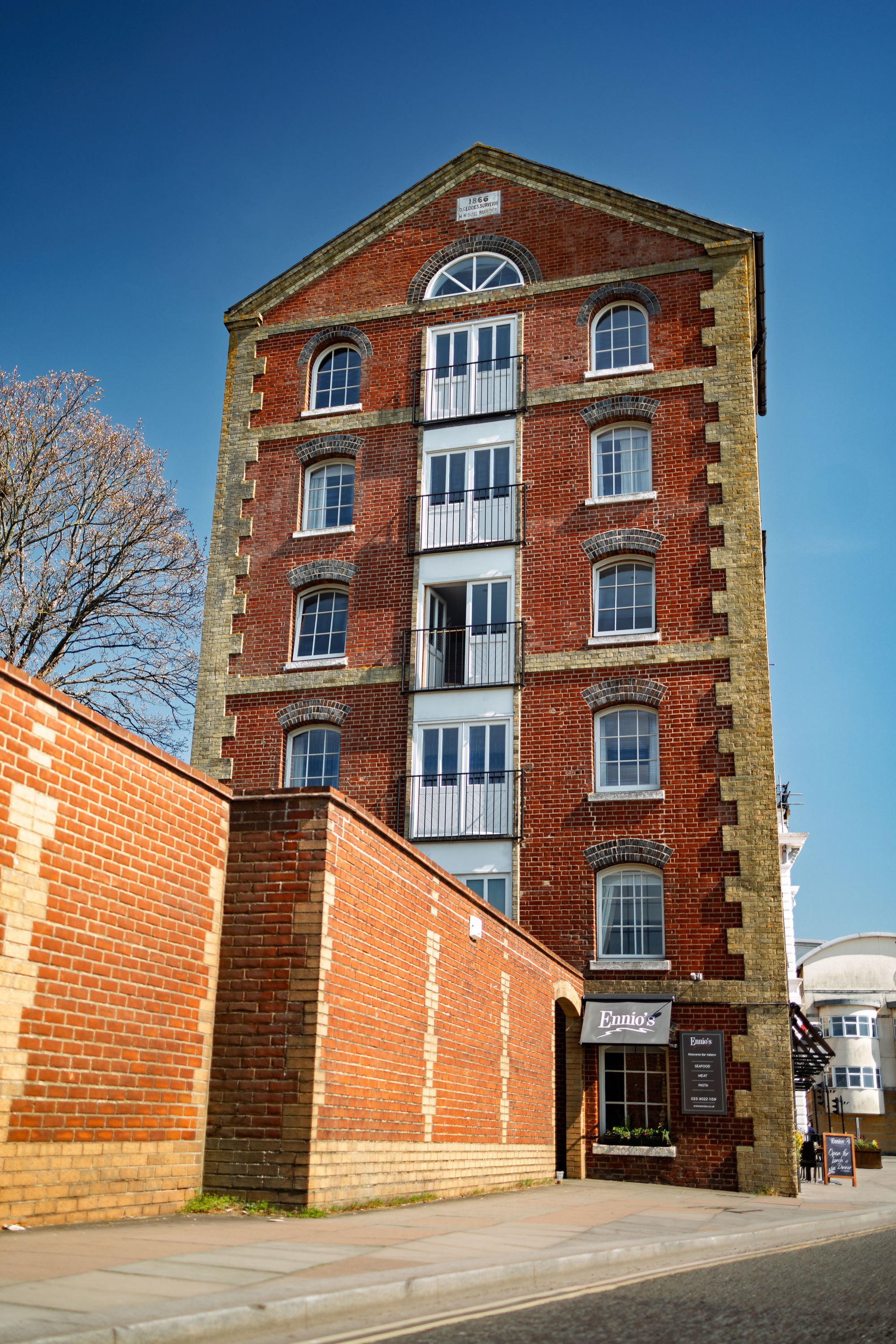
Ennios occupies the ground and first floors of Geddes Warehouse, a six-storey red-brick warehouse on the north side of Town Quay. Above the gable, an inscription still reads "1866, D. Geddes, Surveyor — H.W. Bull, Builder". The surveyor was Donald Geddes of the Southampton Harbour Board. The building is Grade II listed; the medieval city wall runs through the south wall.

From a medieval quay to a ristorante
A short, accurate history of the building that became Ennios, and the half-mile of Southampton waterfront around it.
-
1338Le Mura
French raid, English walls
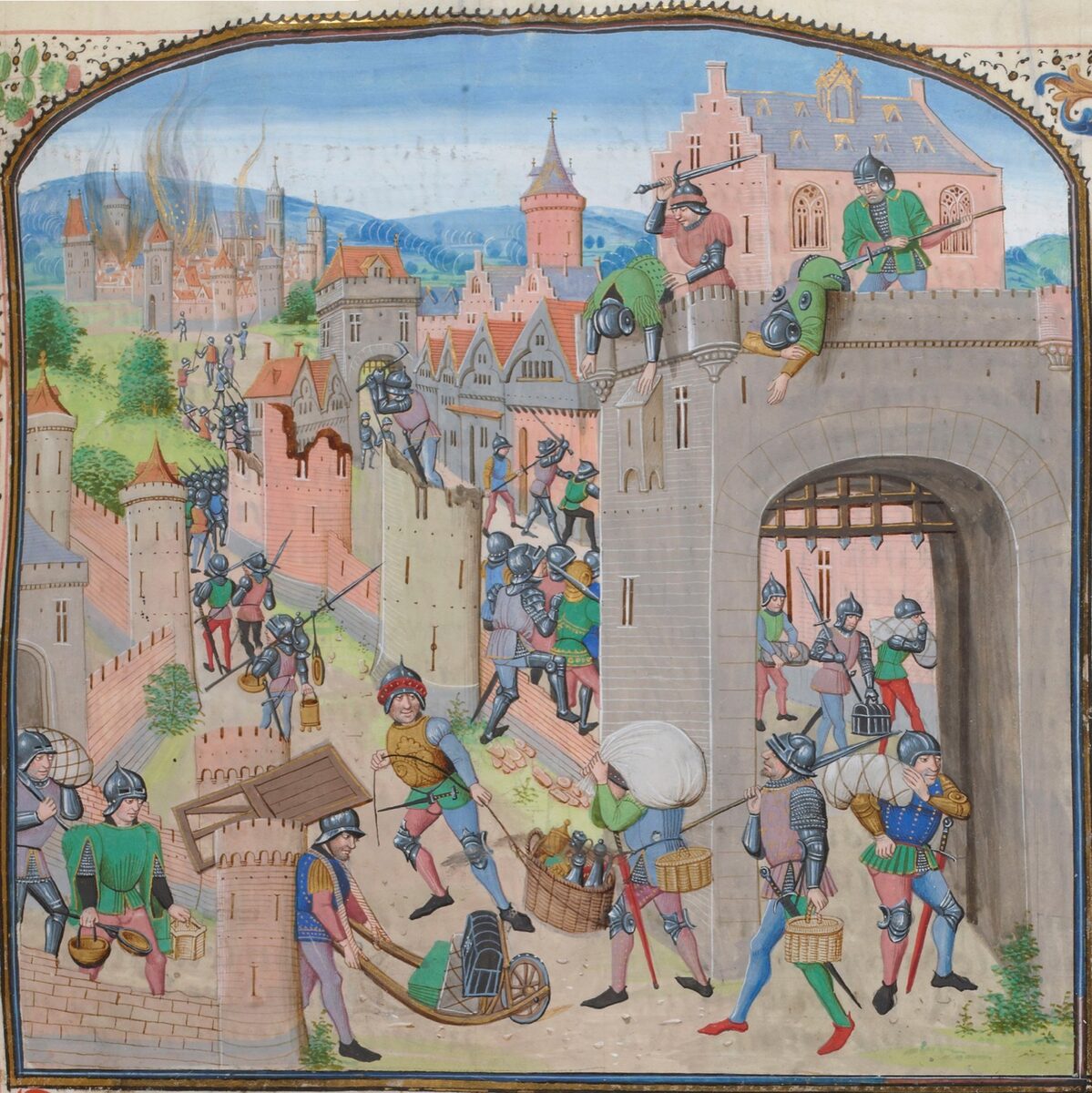
On Sunday 5 October 1338 a combined French and Genoese force under Admiral Hugues Quiéret landed on the under-defended south side of Southampton, burning houses, sacking churches and carrying off whatever the town's quays held. Edward III ordered the town “fully enclosed by stone walls”; murage grants from 1345 funded the South Gate, the curtain wall along the quay, and the fortifications that still stand today, including the section that runs through the south wall of this building.
A 15th-century Froissart Chronicles miniature of a medieval town being sacked. The same chronicle records the 1338 raid on Southampton.
-
1411Watergate Quay
The first quay on this spot
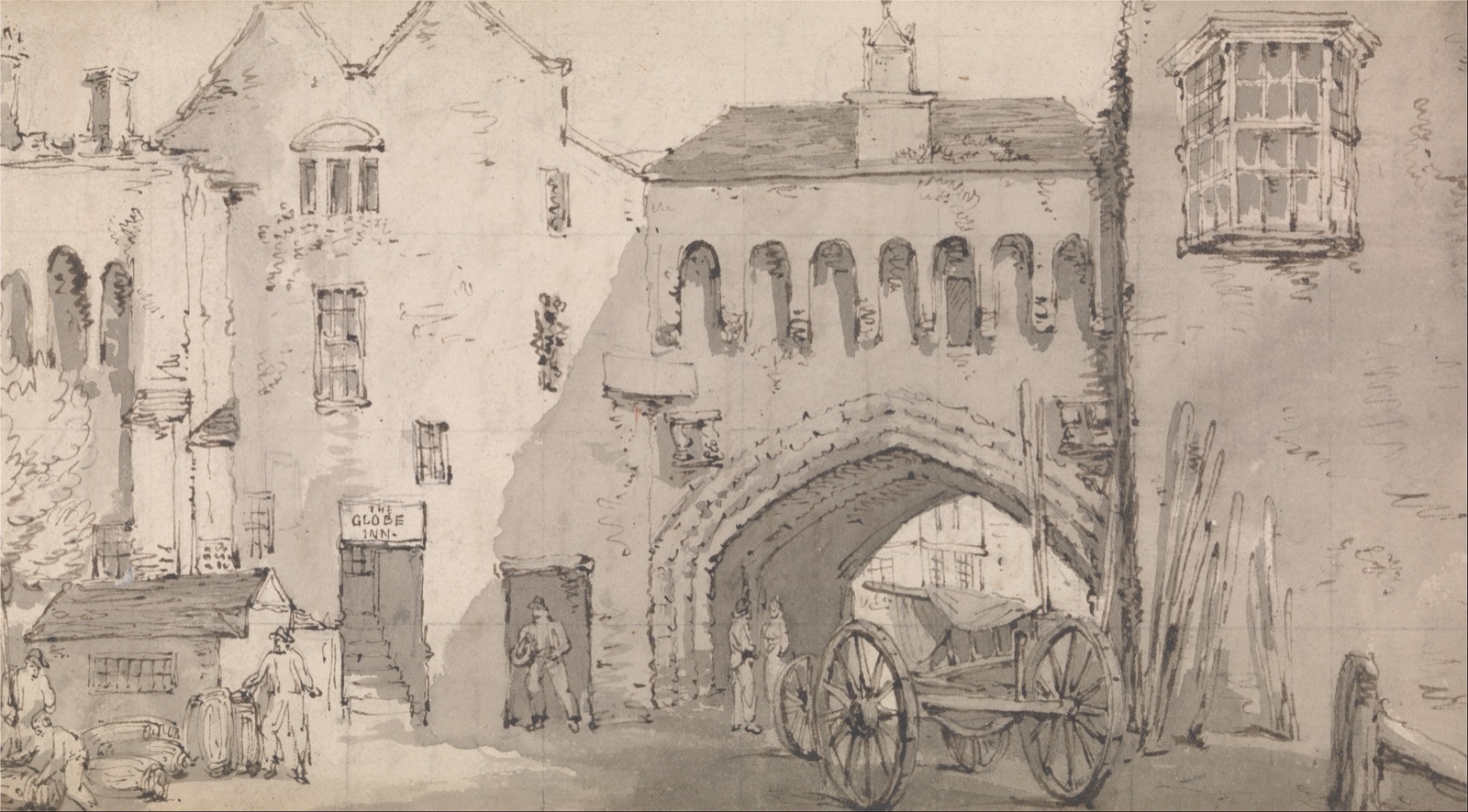
A quay was first recorded on this site in 1411, known then as Watergate Quay. It served the medieval town through the principal gate in the south wall (the Watergate, the main entrance from the sea). The gatehouse stood for almost four centuries before being demolished in 1804; the west tower of the Watergate still stands a few steps from the front door of the building.
Thomas Rowlandson's c.1794 drawing of the Watergate and the Globe Inn beside it, the gatehouse a decade before its demolition.
-
1554–1620Lana, vino, Mayflower
Wool out. Wine in. The Mayflower.
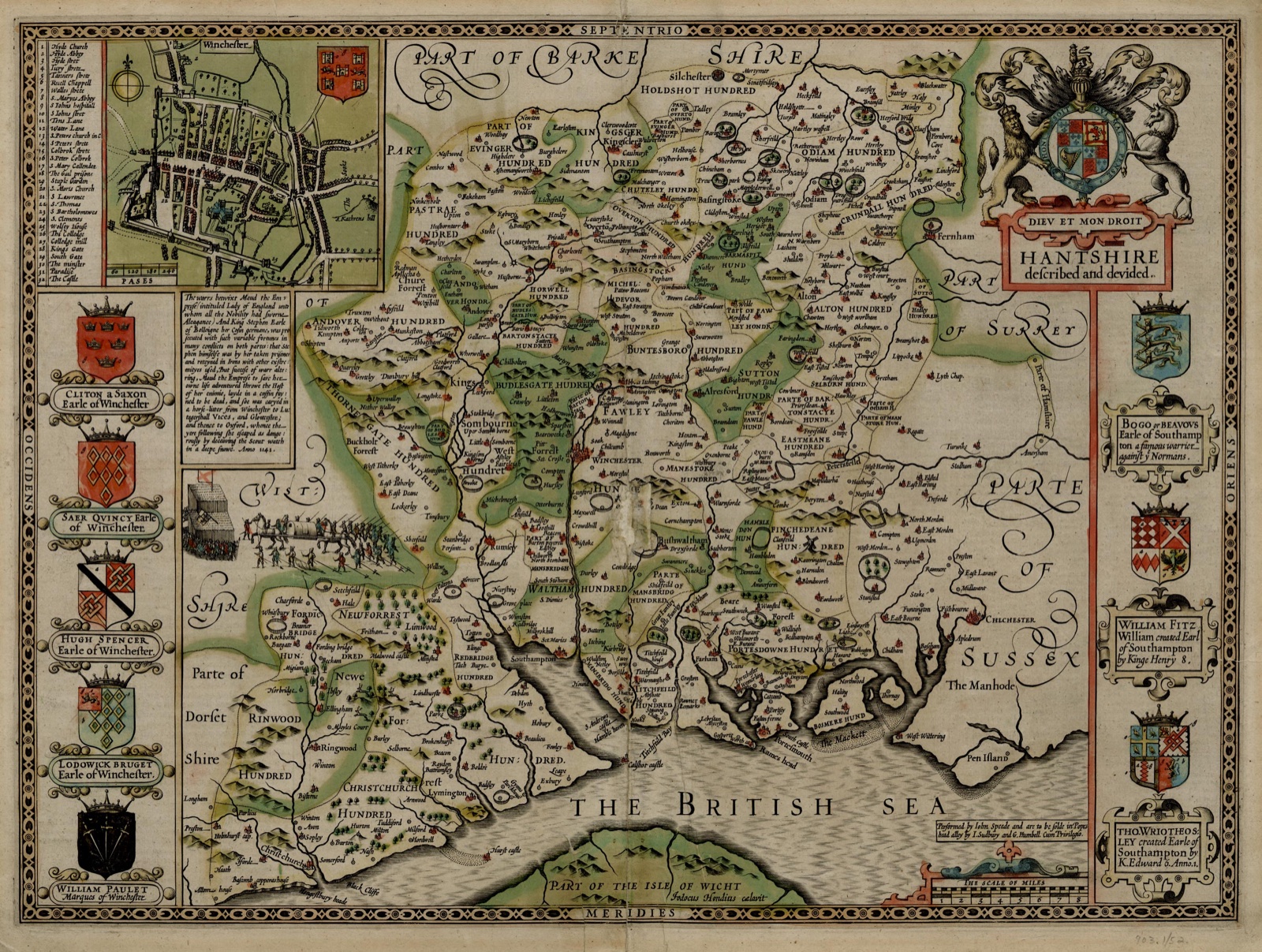
In 1554 Southampton was granted a royal monopoly on the export of wool to the Mediterranean and on the import of sweet wine. For most of a century, the quay just outside the Watergate handled both. In 1620 the Mayflower and the Speedwell dropped anchor in Southampton Water for repairs; the Pilgrim Fathers departed on 15 August before the Speedwell's leak forced both ships back to Plymouth.
John Speed's 1611 map of Hampshire, with an inset plan of Southampton inside its medieval walls, published nine years before the Mayflower sailed.
-
1803Il porto rinasce
A new Town Quay, a new Harbour Board
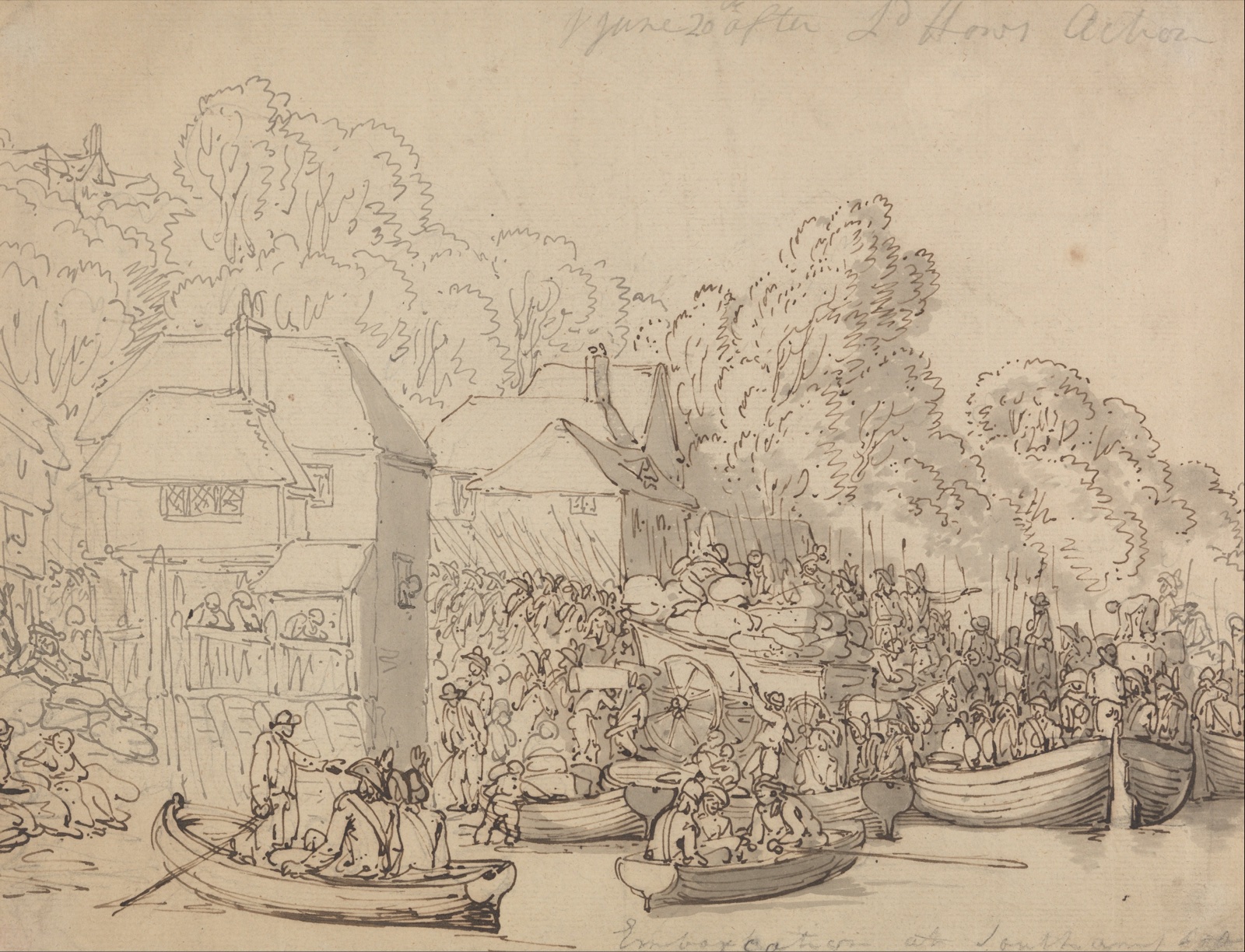
By the late 18th century the medieval quay had fallen out of use and the Watergate was due for demolition. The Southampton Harbour Act 1803 created the Harbour Commissioners and authorised the demolition and rebuilding of the quay. The Watergate came down in 1804; gas lighting was added to the new quay in 1821. The shape of the Town Quay you walk along today dates from this rebuild.
Thomas Rowlandson's 1794 sketch of an embarkation at Southampton. The old quay in its last decade, packed with boats and passengers.
-
1833–1840L'età del vapore
A Royal Pier, a railway, a port reborn
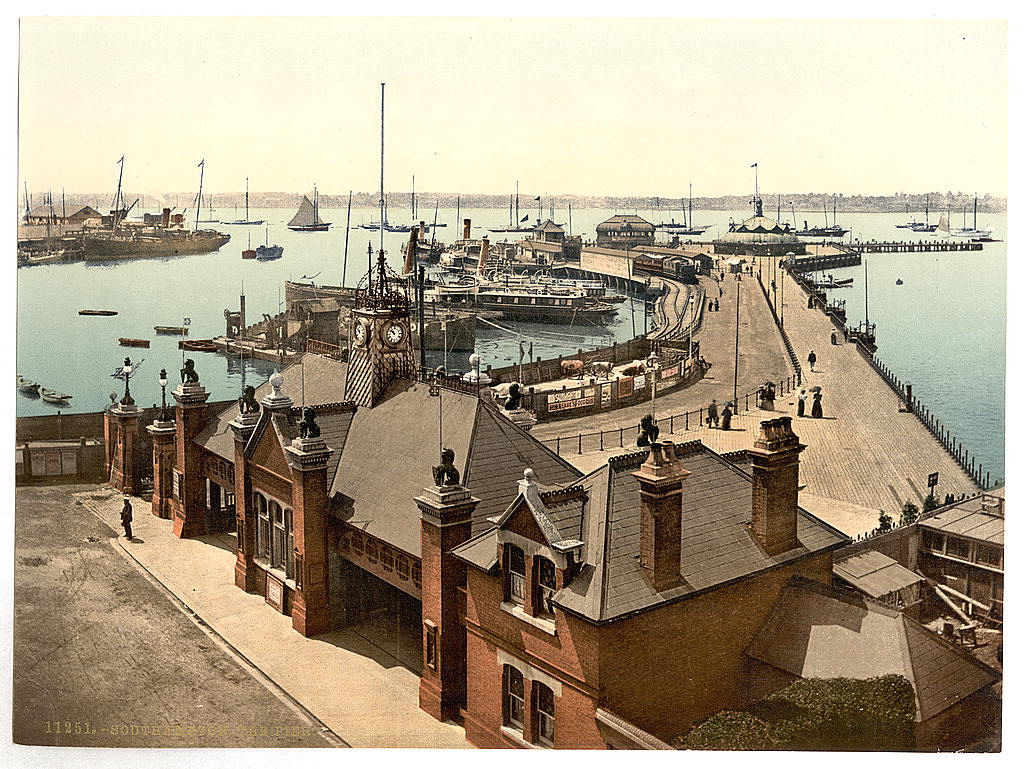
The Royal Pier (originally the Victoria Pier) opened on 8 July 1833, inaugurated by the then-Princess Victoria, to give the new steamer services somewhere to dock. The railway from London arrived in 1840 and the first Outer Dock opened in 1843. Within a lifetime, Southampton turned from a Georgian spa town into the deep-water port that would send the Atlantic liners west.
The Royal Pier in a photochrom postcard, c.1890. Steamers at the berths, Edwardians on the boardwalk.
-
1866Dal 1866
Geddes Warehouse is built
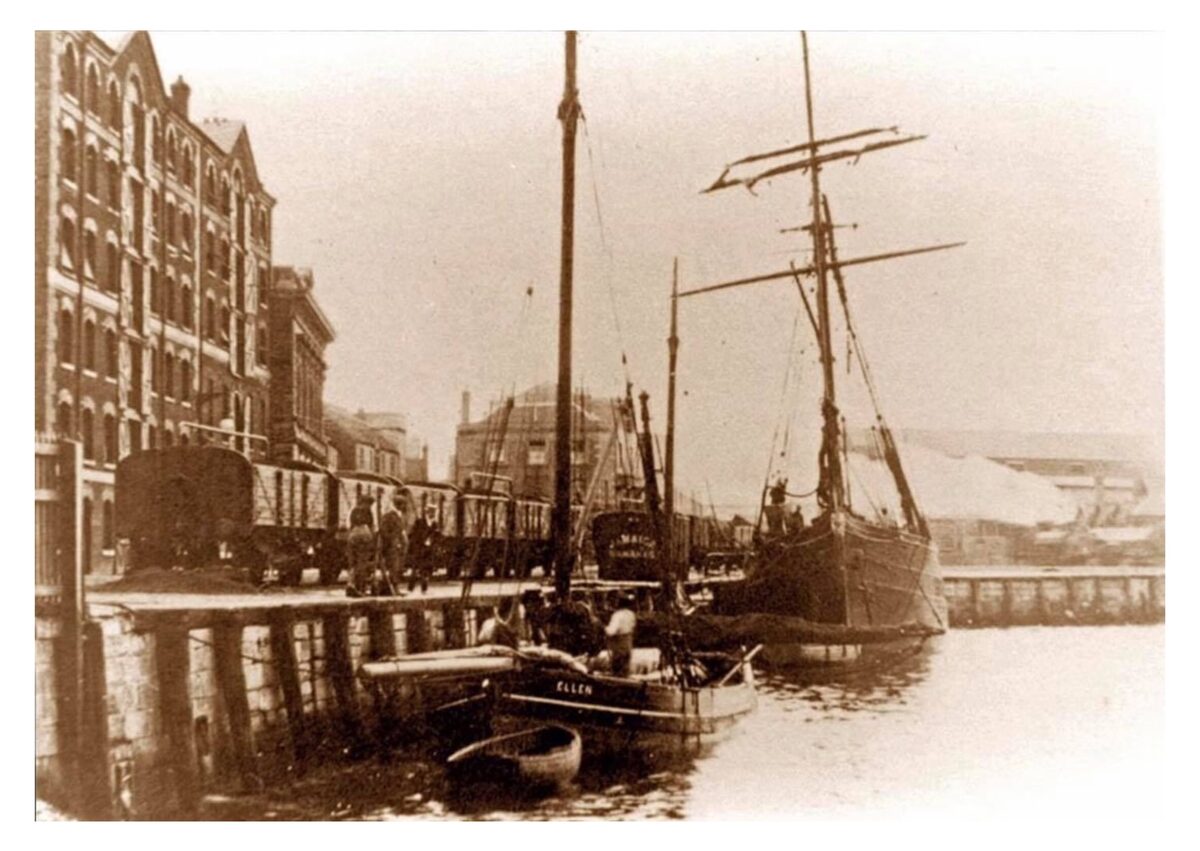
Six storeys of red brick with paler red brick window dressings and yellow-brick quoins, raised as a baggage warehouse for Donald Geddes, Surveyor to the Southampton Harbour Board. The inscription in the gable names them: “1866, D. Geddes, Surveyor — H.W. Bull, Builder.” Twin hoist openings ran the full height of the building so cargo and luggage could be lifted floor by floor straight off the dock.
-
1911White Star
A bigger dock opens, a few hundred metres east
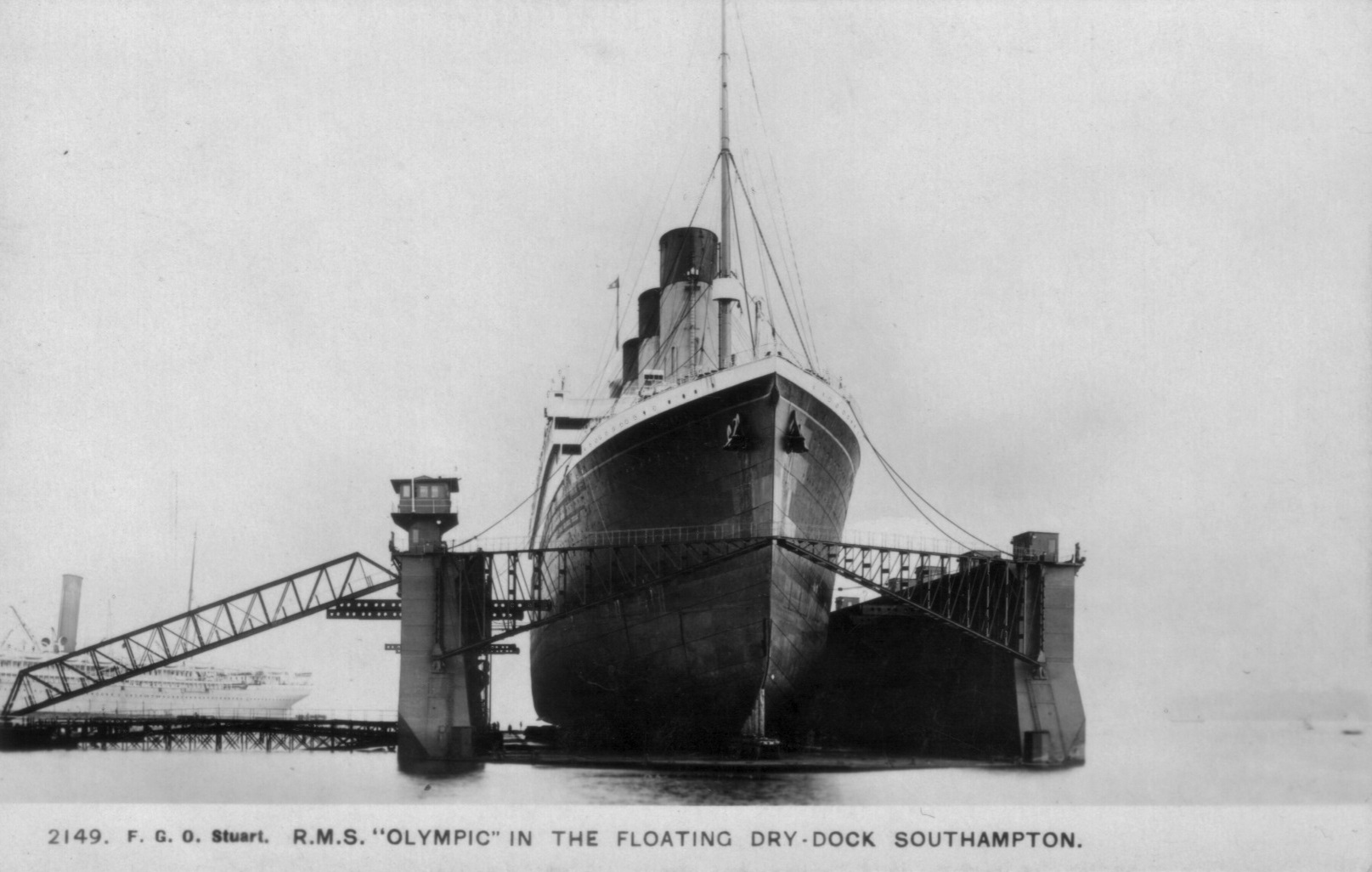
The White Star Dock opened on the eastern side of Southampton in 1911, completing the 170-acre Eastern Docks system. RMS Olympic, the first of the new Olympic-class liners, was the first to berth there. The dock was renamed Ocean Dock in 1922 once Cunard and Canadian Pacific moved in. From this point on, the great liners moved out of the medieval Town Quay and into the new deep-water berths just along the waterfront from Geddes Warehouse.
-
1912Titanic
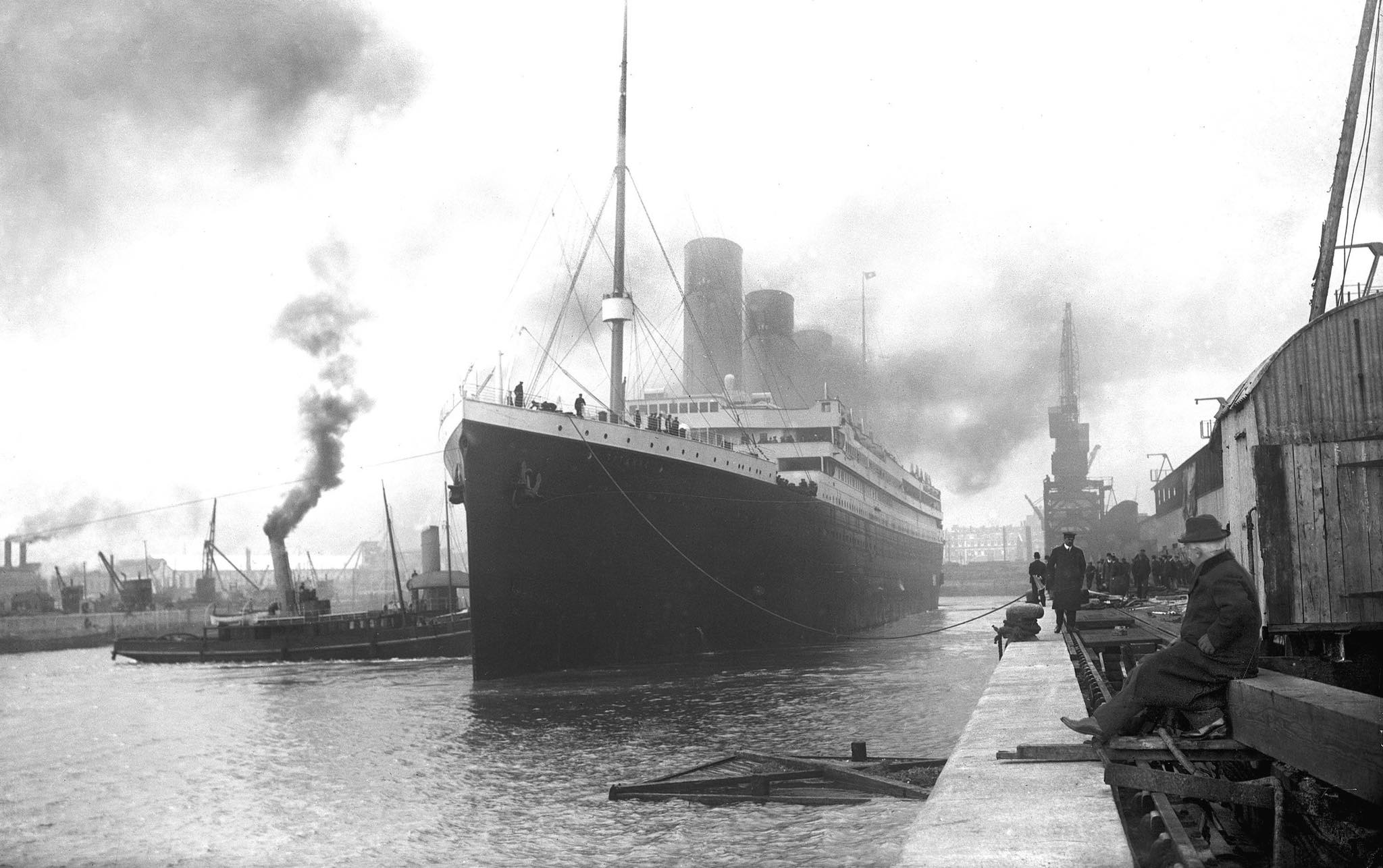
The Titanic sails from Berth 44
On 10 April 1912 the RMS Titanic left Berth 44 of the White Star Dock at noon, a short walk east along the quay road from this building. Geddes Warehouse, then forty-six years old, held baggage bound for the liners; passenger luggage was transported from the warehouse before departures. Many of those travellers stayed at The Grand the night before sailing.
-
1950sIl dopoguerra
Trams, buses and locomotives
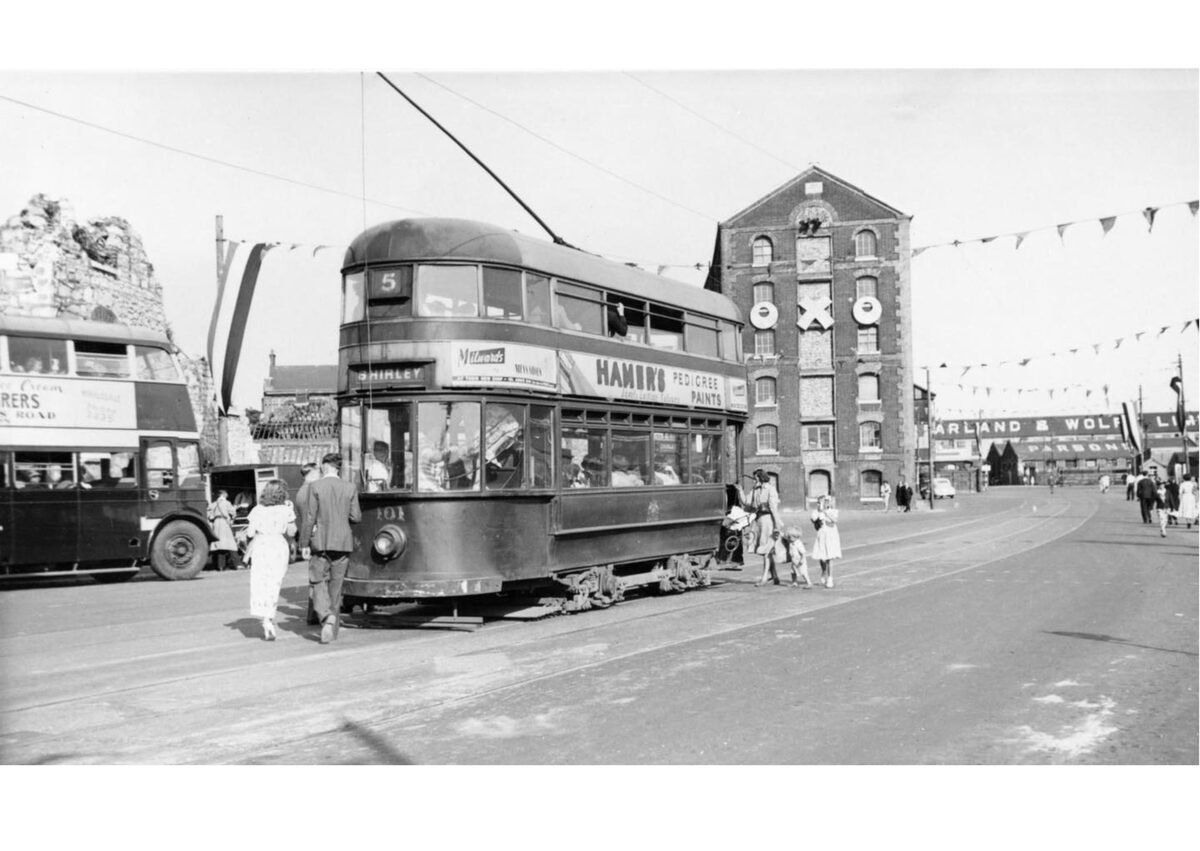
The horse-drawn tramway that linked Town Quay to Southampton Terminus station from 1847 was replaced by locomotive haulage in 1876, and by motor buses and double-deckers in the twentieth century. Through all of it, the wartime barge traffic, the post-war boom, the closure of the railway sidings in 1970, the warehouse did not move. A clipper at the quay one decade, a tram outside it the next, the same brick gable behind both.
-
1980sConversione
From working warehouse to residential
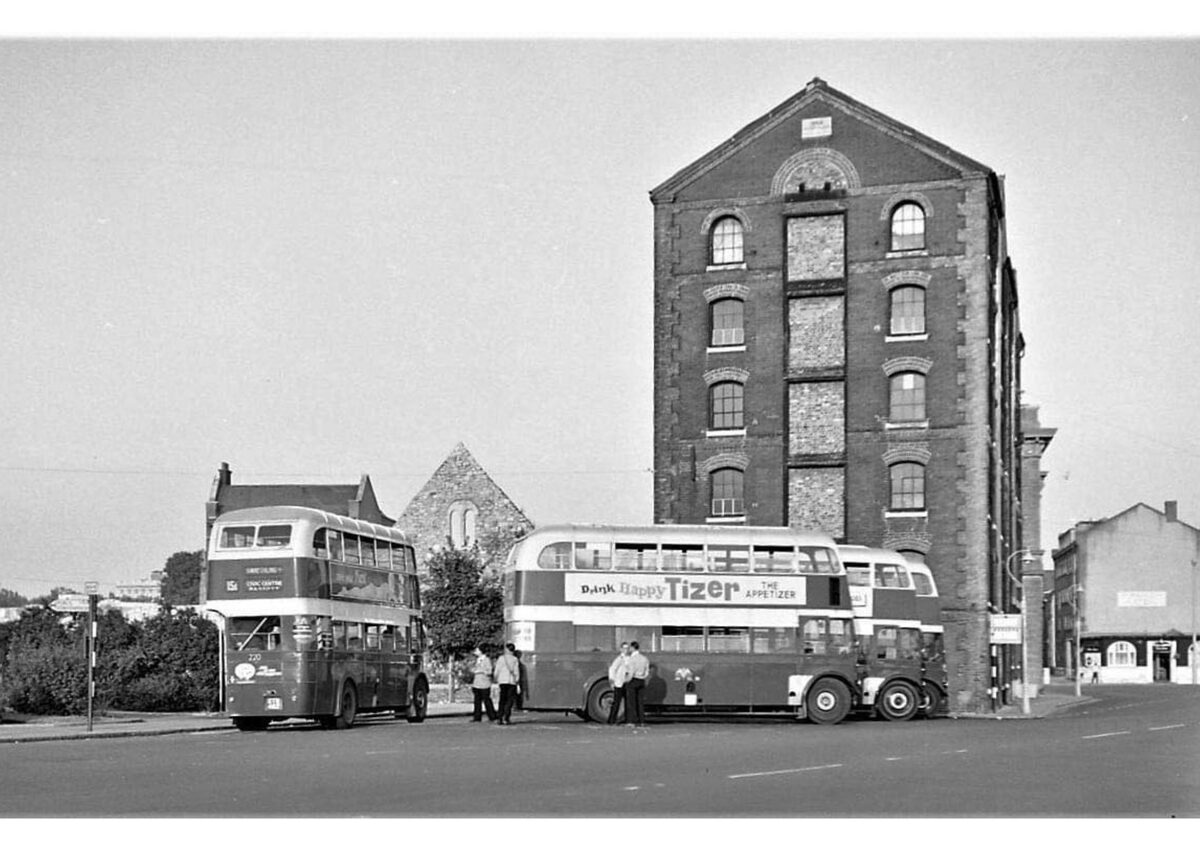
By the 1980s the cargo trade had moved to the container terminals further west. Geddes Warehouse, sometimes known as Porters House after the lane it backs onto, was converted into apartments. The hoist openings on the gables were filled in, the corrugated-iron roof was patched up, and the building settled into quieter use.
-
OggiEnnios
An Italian kitchen, on the old walls
Ennios occupies the ground and first floors of the warehouse today: a hundred-seat ristorante below, ten boutique bedrooms above. The conversion kept what the building was already good at: thick brick walls, generous ceiling heights, the cellar bar built straight into the medieval fortifications.
One hundred and sixty years after H.W. Bull laid the last brick, the warehouse is working the same stretch of quay.


Period imagery from Wikimedia Commons, all public domain: a 15th-century Froissart Chronicles miniature of a medieval town being sacked; John Speed's 1611 map of Hampshire; Thomas Rowlandson's c.1794 drawings of the Watergate and an embarkation at Southampton; the Royal Pier in a c.1890 photochrom; RMS Olympic in Southampton's floating dry dock by F.G.O. Stuart, c.1922. Modern photography courtesy of Southampton Archives and family collections. Historical detail sourced from Historic England's Grade II listing 1091979 for Geddes Warehouse, A.D. Morton's "The French Raid on Southampton 1338" (Southampton Local History Forum, 2014), the British Titanic Society, Mayflower 400 UK, and the Wikipedia articles on Southampton's history, the Port of Southampton, the Mayflower, the Royal Pier and Southampton town walls.

Part of Southampton's Old Town
Ennios sits inside the Old Town quarter and on the route of the Old Town walking tour. Plan a longer afternoon around it.
Visit the Old TownVisit Ennios
Lunch, dinner, or a night above the kitchen.
